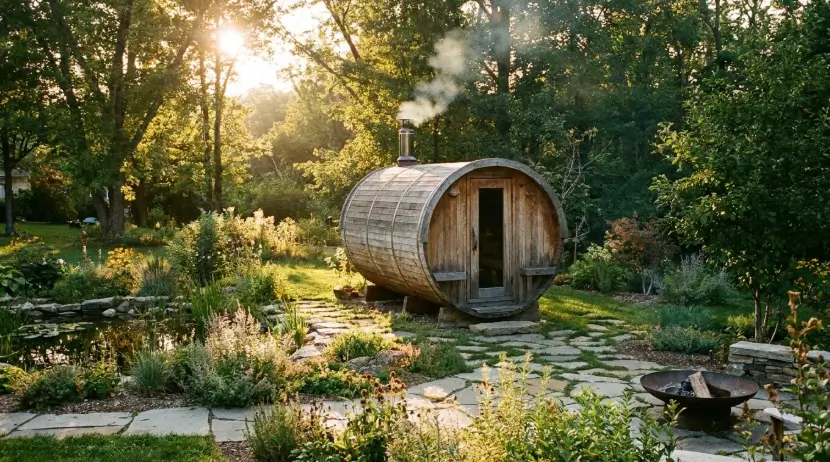
An electric heater costs less to buy and install for most buyers, running $500 to $1,100 for a 4.5 to 6 kilowatt unit with a stone load, while a wood-burning stove kit with a chimney typically runs $600 to $1,300 once flashing and roof jack hardware are included. Electric heat is the cheaper path for most suburban buyers because it skips chimney permitting and roof work entirely. Wood heat often costs less per session where firewood is cheap, but that savings takes years of regular use to offset the higher upfront and installation cost.
What Does Each Heater Actually Cost Upfront?
An electric heater for a 6-foot diameter barrel typically lists between $500 and $1,100 depending on kilowatt rating and stone capacity, and installation is often limited to running a dedicated circuit if the heater exceeds roughly 6 kilowatts. A wood-burning stove designed for barrel saunas runs a similar range for the stove body itself, but the chimney kit, roof flashing, and required clearance to combustible material add $200 to $500 more in parts, before accounting for labor if a buyer hires help with the roof penetration.
How Do Ongoing Fuel Costs Compare?
A typical 60 to 90 minute electric sauna session costs roughly $0.50 to $1.50 in electricity depending on local utility rates and heater wattage. A wood-fired session burns through a modest armful of split wood, which costs $1 to $3 per session at retail firewood prices, or close to nothing for someone with a free source like fallen trees on their own property. Over a full year of regular use, several sessions a week, the fuel cost difference rarely exceeds a few hundred dollars either way, which is smaller than most buyers expect going in.
What Permits or Inspections Does Each Require?
Wood-burning heaters usually need a permit for the chimney penetration through the sauna roof, comparable to permitting a wood stove installed in a house, and some jurisdictions require an inspection before first use. Electric heaters generally only trigger a permit requirement when a new dedicated circuit is being installed, and many homeowners already have adequate service near the sauna site that keeps the electrical work simple. Skipping a required permit on either type can complicate an insurance claim later if a fire-related incident ever occurs, so it is worth the modest fee and paperwork.
Which Heat Type Feels Different Inside the Barrel?
Both heater types can produce genuine löyly, the burst of steam released when water hits hot stones, as long as the stone load is sized correctly for the heater. Wood heat has a reputation among longtime users for a softer, more even feel, partly due to the mass of the stove body itself, while electric heat reaches a stable target temperature more predictably and is easier to control with a simple thermostat. Neither is objectively better; the difference is closer to preference than performance once both are properly sized.
Where Do Buyers Typically Save the Most on a Budget?
For most first-time buyers working with a fixed budget, electric heat is the simpler path because it avoids chimney installation costs and permitting delays that can push a project’s timeline out by weeks. Buyers who already have cheap or free firewood, or who specifically want the wood-fired experience, can still land close to the same total cost as electric once fuel savings accumulate over several seasons. Comparing full unit pricing, heater included, across a few sellers, such as the team at SweatDecks, shows the real gap between the two heat types more clearly than looking at shell price alone.
Do Long-Term Costs Change Which Option Wins?
A quality electric heating element typically lasts 5 to 10 years under regular use before the coils need replacing, a part that usually costs $150 to $350 including labor. A wood-burning stove body, having no electrical components, often lasts 15 years or more with only occasional gasket or door hardware replacement. Factoring in a single element replacement over a decade narrows the long-term cost gap between the two heat types even further.
Does Climate Change Which Heat Type Makes More Sense?
In a cold climate, a wood-burning heater needs a properly drafting chimney to vent efficiently, and a chimney that runs cold or gets blocked by snow can smoke back into the cabin, a problem electric heaters simply do not have. Electric heaters also reach a stable target temperature more predictably in freezing outdoor air, since there is no fire to manage or wood to keep dry near the unit. In a mild or dry climate, wood heat is less finicky, and a covered woodpile stays usable year-round without the moisture problems that plague firewood storage in wetter regions. Buyers in genuinely cold, snowy climates often lean electric for this reason alone, independent of the cost comparison.
Does the Research on Sauna Bathing Depend on Heat Source?
The cardiovascular associations documented in a 2018 Mayo Clinic Proceedings review and a separate 2018 systematic review in Evidence-Based Complementary and Alternative Medicine come from studies of Finnish-style sauna bathing broadly, without distinguishing wood-fired heat from electric heat as the source. What matters physiologically appears to be reaching and sustaining an adequately hot, low-humidity or steam-cycled environment, not the mechanism producing that heat, so the choice between electric and wood heat can reasonably be made on cost and convenience rather than any documented difference in health outcome.
Frequently Asked Questions
Is a wood-fired barrel sauna cheaper than electric long term? Per session, wood heat is often cheaper where firewood is inexpensive or free, roughly $1 to $3 in fuel per session versus $0.50 to $1.50 in electricity. But wood heaters usually cost more upfront and need a chimney kit, which can offset years of fuel savings.
Do I need a permit for a wood-burning barrel sauna heater? Many municipalities require a permit for the chimney penetration through the roof, similar to a wood stove permit for a house. Electric heaters typically only need an electrical permit if a new dedicated circuit is being run.
Which heat type gives a more authentic sauna experience? Many longtime sauna users prefer wood heat for the character of the heat and the ritual of tending a fire, though a quality electric heater with a good stone load produces very similar steam and heat quality once the barrel is at temperature.
How long does each heater type last? A quality electric heating element typically lasts 5 to 10 years with regular use before needing replacement. A wood-burning stove body can last significantly longer, often 15 years or more, since it has no electrical components to fail.
References
- Cardiovascular and Other Health Benefits of Sauna Bathing: A Review of the Evidence, Mayo Clinic Proceedings, 2018
- Clinical Effects of Regular Dry Sauna Bathing: A Systematic Review, Evidence-Based Complementary and Alternative Medicine, 2018
- Saunas and your health, Harvard Health Publishing
By Colette Ibarra